
Search Tennessee Warrant Records
Tennessee Warrant Records can come from sheriff offices, local police files, court dockets, jail logs, and older archived collections. Some searches start with a county warrant page. Others start with a clerk, a public records request, or a statewide database that helps narrow a name, charge, or court location. This Tennessee guide pulls those paths together so you can search smarter, know which office keeps which record, and understand when a warrant file may be open, limited, delayed, or redirected to another agency.
Tennessee Warrant Records Quick Facts
Where Tennessee Warrant Records Sit
Tennessee Warrant Records are not kept in one statewide trial court index. That matters. A warrant search often starts with the county that issued the paper, the court that signed it, or the sheriff office charged with service. The Tennessee Administrative Office of the Courts supports the court system, but the research file makes clear that it does not run a central trial court warrant database. For many people, that means the best first step is local. A county sheriff may post active warrant tools, a jail portal may show recent bookings tied to warrant service, and a clerk may keep the underlying case file once the matter moves into court.
The statewide layer still helps. Tennessee Warrant Records may connect to a criminal case that later appears in appellate filings, archived court records, or correction records. The Public Case History tool covers the Supreme Court, Court of Appeals, and Court of Criminal Appeals, so it can help trace a case after trial court action, but it is not an active warrant finder. The Tennessee State Library and Archives also holds older court materials, dockets, and warrant-related historical collections. Tennessee Warrant Records often need that kind of layered search.
A good search path is simple. Start local. Confirm the court. Then widen the search if the file moved, aged out of a county web tool, or became part of a later criminal case record.
See the state court system first if you know the court but not the county. Use the Office of Open Records Counsel guidance if you need help framing a Tennessee public records request for warrant files.
How Tennessee Warrant Records Searches Work
Tennessee Warrant Records searches work best when you search with a goal. Are you trying to confirm whether a warrant is active, find the court connected to a served warrant, inspect a public case file, or locate an old warrant reference in a historical collection. Each path uses different records. Sheriff offices often handle active service information. General Sessions and Criminal Courts may hold the case tied to the warrant. Clerks can provide copies when the file is public and identified with enough detail.
The research shows that Tennessee agencies expect a request to be specific. Under the Tennessee Public Records Act, a request should identify the records clearly enough for the office to find them without doing new analysis. That matters for Tennessee Warrant Records because a name alone may not be enough in a large county. A full name, date of birth, case number, warrant type, court division, charge date, or booking date can narrow the search. It also helps to know whether you are asking for inspection, plain copies, or certified copies from a clerk.
Searches also have limits. A name match can point to the wrong person. The research for the Tennessee Bureau of Investigation notes that name-based results can raise mistaken identity issues. That is one reason why Tennessee Warrant Records should be checked against local court files, booking records, or clerk dockets before you rely on them.
Note: A strong request names the office, the record type, and the date range in one short line.
Tennessee Warrant Records Through TBI
The Tennessee Bureau of Investigation offers Tennessee Open Records Information Services through TORIS. It is not a pure active warrant tool, but it is still useful when Tennessee Warrant Records connect to arrests, charges, and convictions within Tennessee. The research says the public name-based search costs $29.00, returns results as a PDF, and can be completed online or by mail. Required fields include complete name, race, sex, and date of birth. Address and Social Security number are optional, but they can improve accuracy.
The TORIS search has important limits. The report is Tennessee-only. It does not pull from other states, and it is not the same as a live statewide warrant board. Still, Tennessee Warrant Records research often uses it to confirm whether a local warrant matter led to a known arrest or charge that later entered a broader criminal history. The TBI research also notes that desktop or laptop access may work better because the PDF results may not display well on every mobile device.
A different TBI tool can help in some cases. The Tennessee Sex Offender Registry, its search portal, and the related map interface are public tools that can help users cross-check names, addresses, and status details when a Tennessee Warrant Records search overlaps with a registry-regulated offense or a location-based public safety concern. That registry is free to search around the clock.
This image points to the official registry information page at tn.gov/tbi/general-information/tennessee-sex-offender-registry.html.
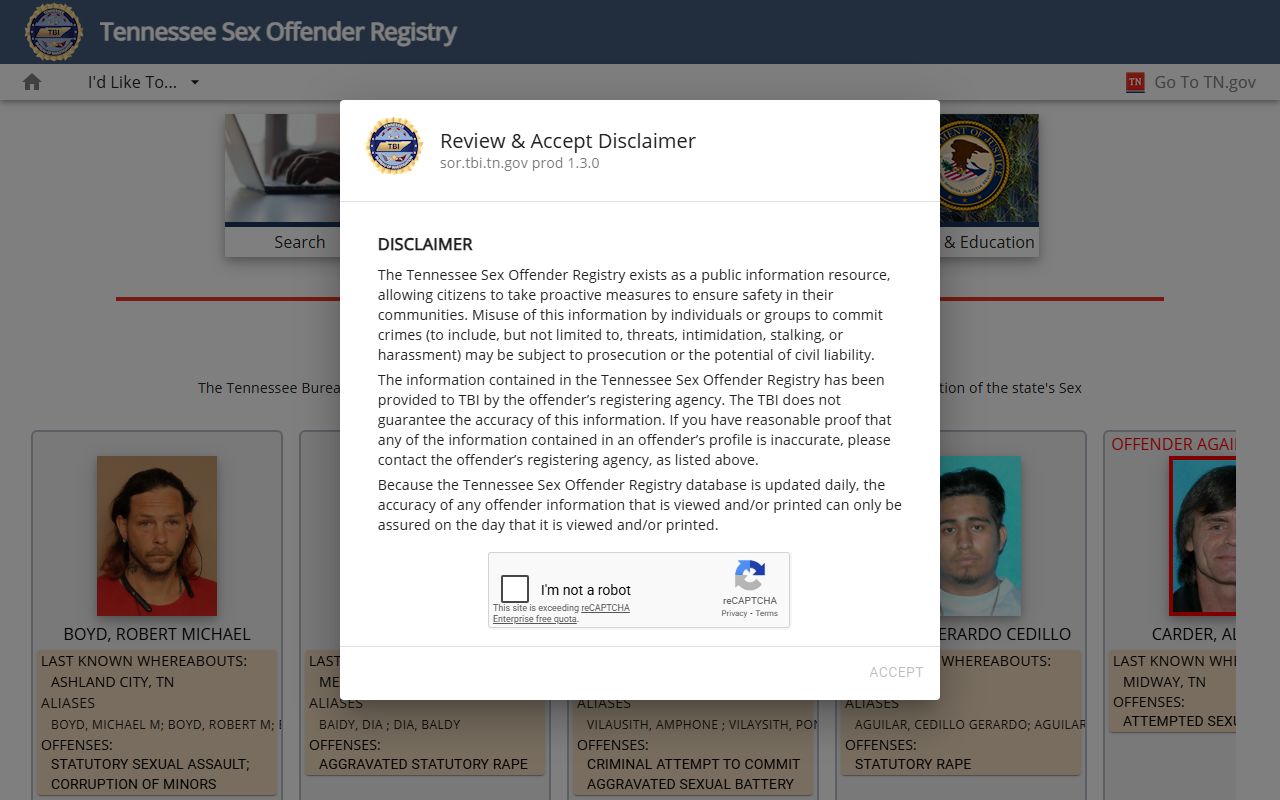
It helps users understand what the statewide registry includes and how it fits beside other Tennessee Warrant Records research tools.
This image links to the public registry search portal at sor.tbi.tn.gov/home.
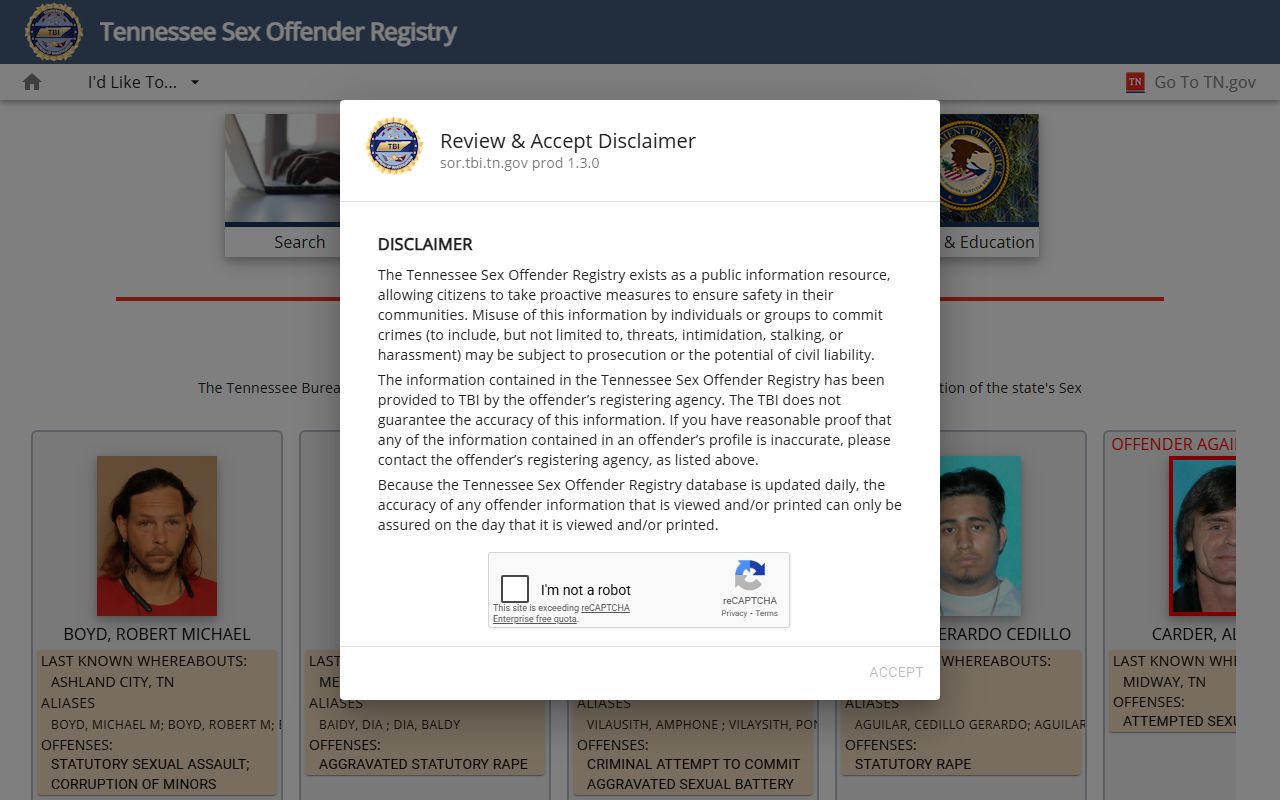
The search screen is useful when a warrant-related search needs another public statewide source for checking names, status, and location clues.
Before using a TBI search result, compare it with the local county or city source that actually issued or served the warrant. Tennessee Warrant Records are strongest when the state and local pieces line up.
See the TBI background check page at tn.gov before paying for a search, because the page explains the current process, contact details, and result format.
To help illustrate the statewide search tools, this image points to the official TBI background page at tn.gov/tbi/divisions/cjis-division/background-checks.html.
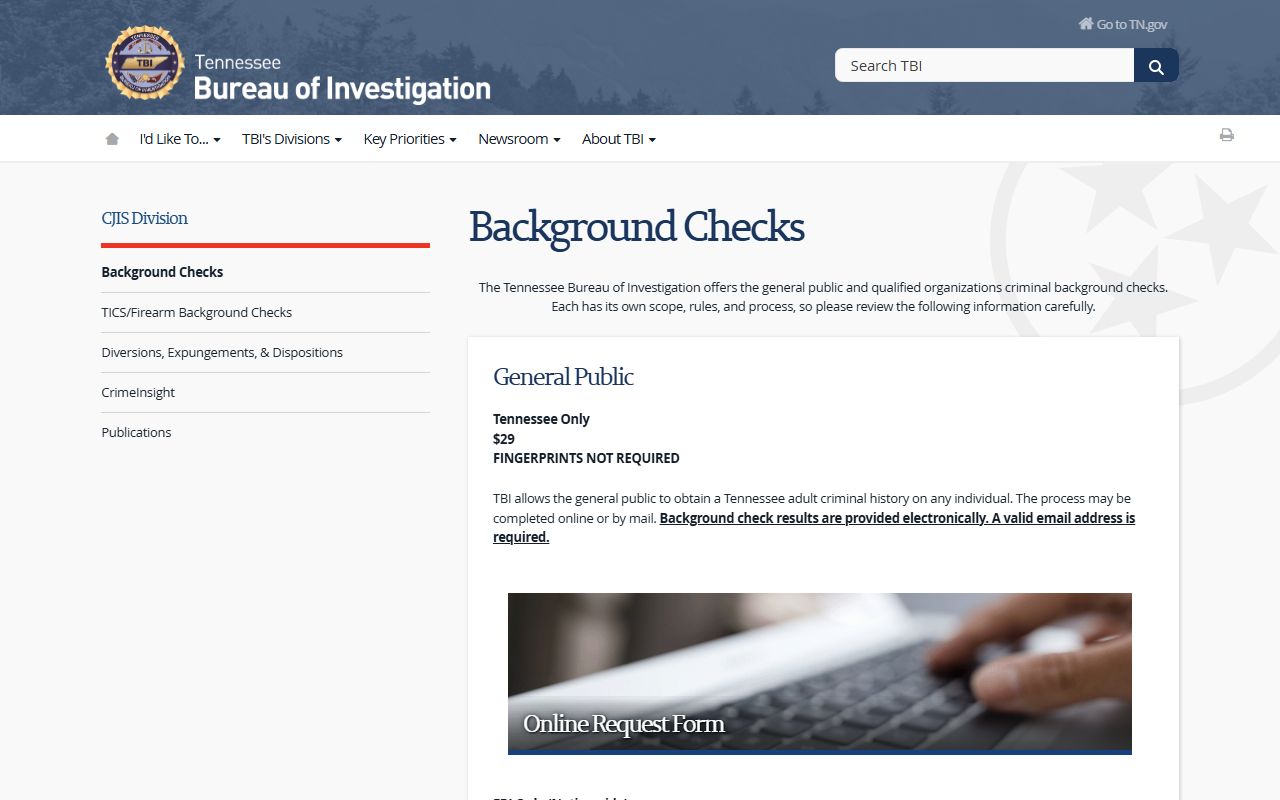
The page gives one of the clearest statewide entry points for Tennessee Warrant Records research tied to arrests and criminal history.
This second image leads into the official TORIS portal at tbibackgrounds.tbi.tn.gov/Toris/.
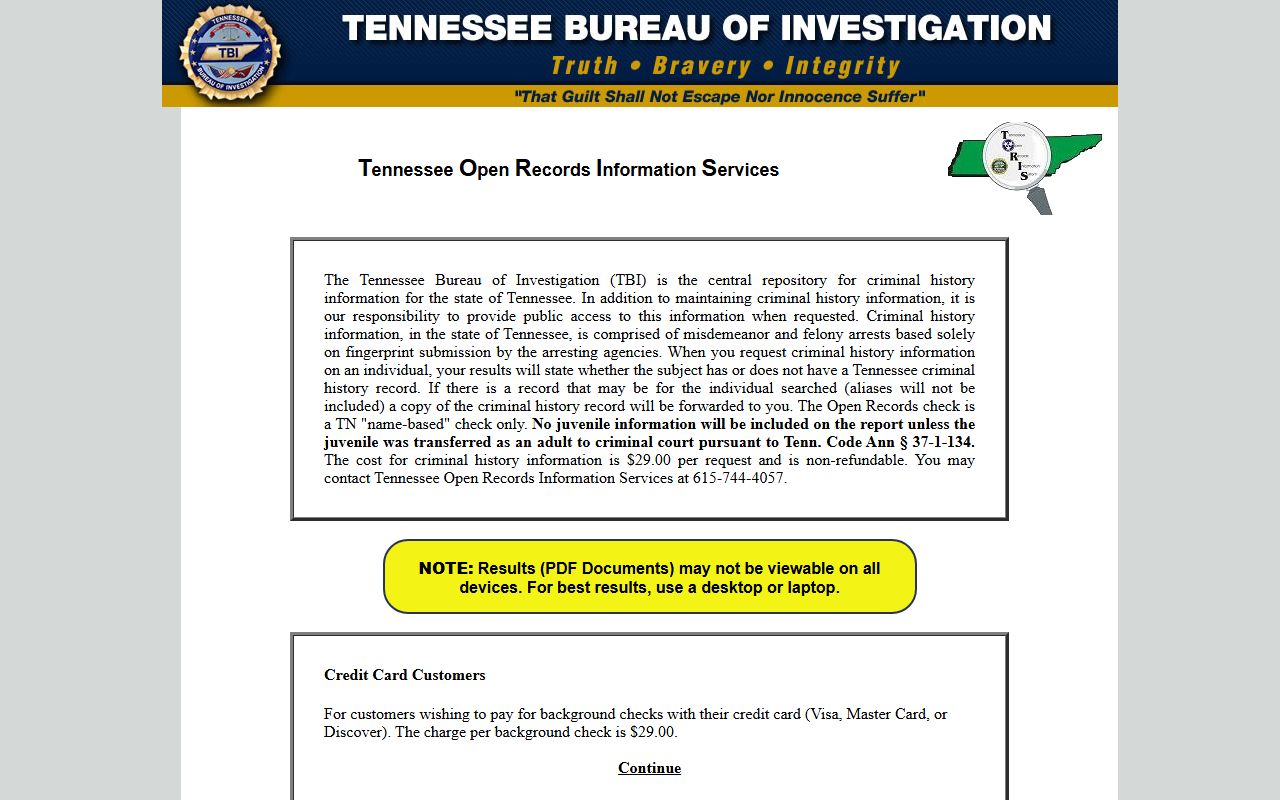
It shows the public-facing system Tennessee users can use when they need a statewide criminal history search tied to a warrant-related case trail.
Tennessee Warrant Records In Court Files
Tennessee Warrant Records often turn into court records fast. Once charges are filed, the warrant may tie into a criminal complaint, a booking event, a preliminary hearing, an indictment, or later appellate filings. That is why the court layer matters as much as the law enforcement layer. The Administrative Office of the Courts explains the statewide court structure, while the Public Case History tool provides access to appellate case history after a case moves beyond the trial level.
The research also points to Tennessee Rule of Criminal Procedure 41 for warrant issuance, execution, return, and inventory requirements. It notes that Tennessee Code Annotated Title 40, Chapter 6, Part 2 covers arrest warrants, while Title 40, Chapter 8, Part 1 governs search warrants. These citations belong inside the page because they explain why Tennessee Warrant Records may appear in several places. A magistrate issues the warrant. Law enforcement serves it. A clerk keeps the later case file. A judge may order parts of a file sealed or redacted if the law requires it. The path is procedural, not random.
Search warrants have their own timing rule in the research. Tennessee Rule of Criminal Procedure 41 and the state-law summary note that search warrants are typically valid for five days from issuance. That does not mean the full record disappears after five days. It means the execution window is short, while the paperwork, return, and any court challenge can remain part of a later file. Tennessee Warrant Records searches should account for that difference.
This image links to the official appellate case history page at tncourts.gov.
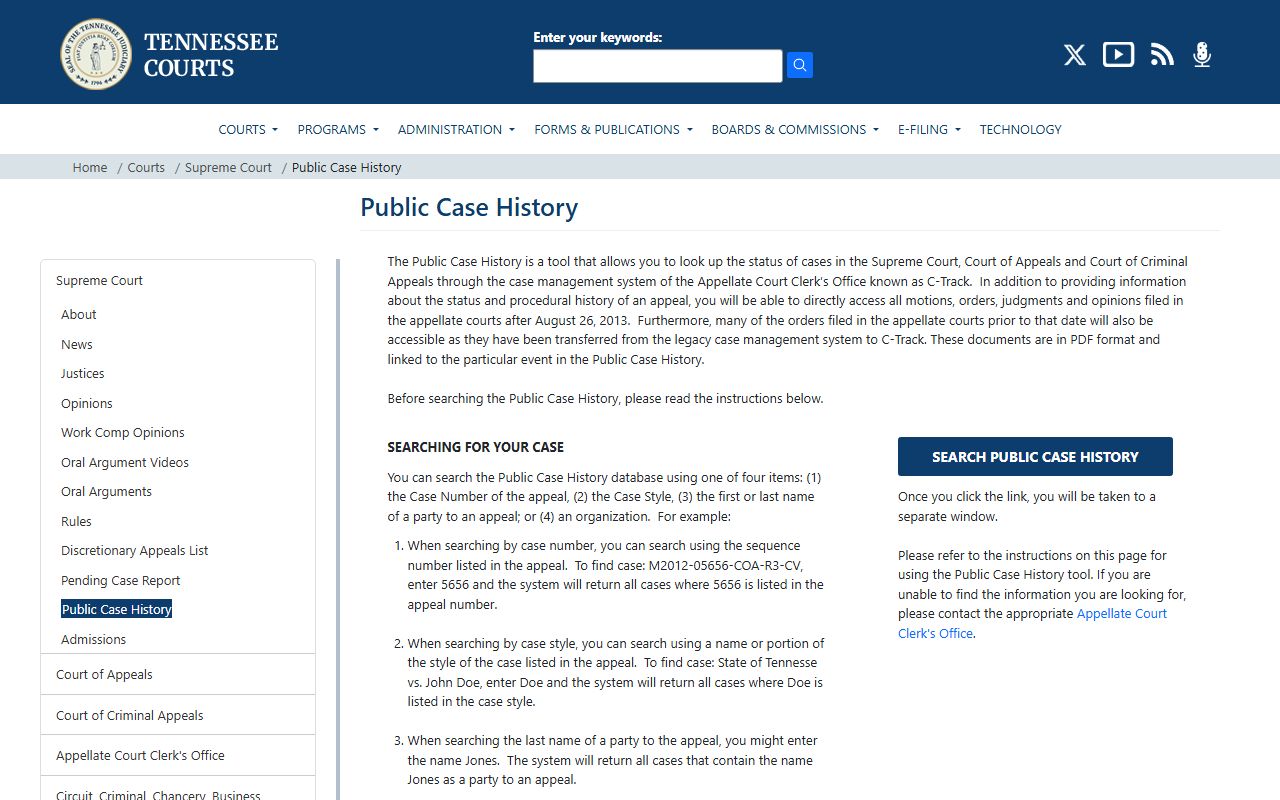
It helps show where a local warrant-related case may surface after trial court action, even though it does not function as a trial court warrant search.
This image points to the official court administration site at tncourts.gov.
That site helps users navigate court structure, appellate tools, and broader Tennessee judicial resources tied to warrant-related case records.
Tennessee Warrant Records And Public Access
Tennessee Warrant Records are shaped by the Tennessee Public Records Act. The research summarizes public records guidance and explains that Tennessee citizens generally may inspect state, county, and municipal records during business hours unless an exception applies. Agencies must respond within seven business days by providing records, denying the request with a reason, or giving a time estimate. For warrant-related material, that timeline can apply to sheriff offices, police departments, jails, or clerk files, depending on who holds the record.
Access is not absolute. Tennessee Warrant Records may be withheld or partly redacted when they fall inside active criminal investigation records, sealed court records, juvenile files, victim-protection categories, or other listed exceptions under T.C.A. § 10-7-504. That is why one office may release a docket entry while another denies a request for the underlying investigative narrative. The research also notes that inspection is usually free, while copy charges can follow the state schedule, including per-page costs and labor after the first hour.
The Office of Open Records Counsel does not take the request for you, but it can help users understand the rules, charge schedule, and dispute process. For Tennessee Warrant Records, that guidance is useful when a county asks for a narrower request or points to a local public records policy.
This image links to the Office of Open Records Counsel at comptroller.tn.gov.

It gives Tennessee users a practical path for understanding response deadlines, copy charges, and what an agency may redact in a warrant-related file.
Historical Tennessee Warrant Records
Not all Tennessee Warrant Records stay in local online systems. Older records may move to archives, microfilm, or long-term case storage. The Tennessee State Library and Archives is important here because the research says it holds historical court records, case files, dockets, and early warrant-related collections, including land warrants from the Revolutionary War period through the early nineteenth century. That does not make every warrant easy to find, but it gives researchers a way to keep going when the modern local page stops short.
Historical searches need a different mindset. Tennessee Warrant Records from older case files may be indexed by court term, docket book, or case style instead of by the fields modern users expect. The archive can be useful for researchers, families, title questions, or anyone tracing how an old criminal or civil proceeding was recorded. The research also notes that some collections are accessible through partnerships that help Tennesseans review records without traveling for every search.
County clerks and circuit clerks still matter for older records. A local office may tell you that the file is off-site, microfilmed, or transferred. When that happens, the archive page is often the next practical step in a Tennessee Warrant Records search.
This image links to the State Library and Archives at sos.tn.gov/tsla.

It highlights the statewide archive resource that can help when a warrant-related record is older than local online systems or no longer posted on a county site.
What Tennessee Warrant Records May Show
Tennessee Warrant Records can show different details depending on the source. A sheriff warrant page may list a name, charge, bond amount, or service status. A jail portal may show booking date, warrant type, arresting agency, or court division. A clerk file may add the complaint, hearing date, indictment, or final disposition. The Felony Offender Information Lookup and the Tennessee Department of Correction can help once a case reaches the post-conviction stage, but those tools do not replace local warrant files.
The FOIL research is useful because it tells users what the state correction database can and cannot do. It covers felony offenders statewide, generally back to 1990, and offers name, race, gender, TDOC ID, and state ID searching. It can show offense history, status, and release-related information. That makes it a downstream source for Tennessee Warrant Records research. It is useful after arrest and conviction. It is not the place to confirm whether a fresh county warrant is active today.
This image links to the official FOIL page at apps.tn.gov/foil-app/search.jsp.
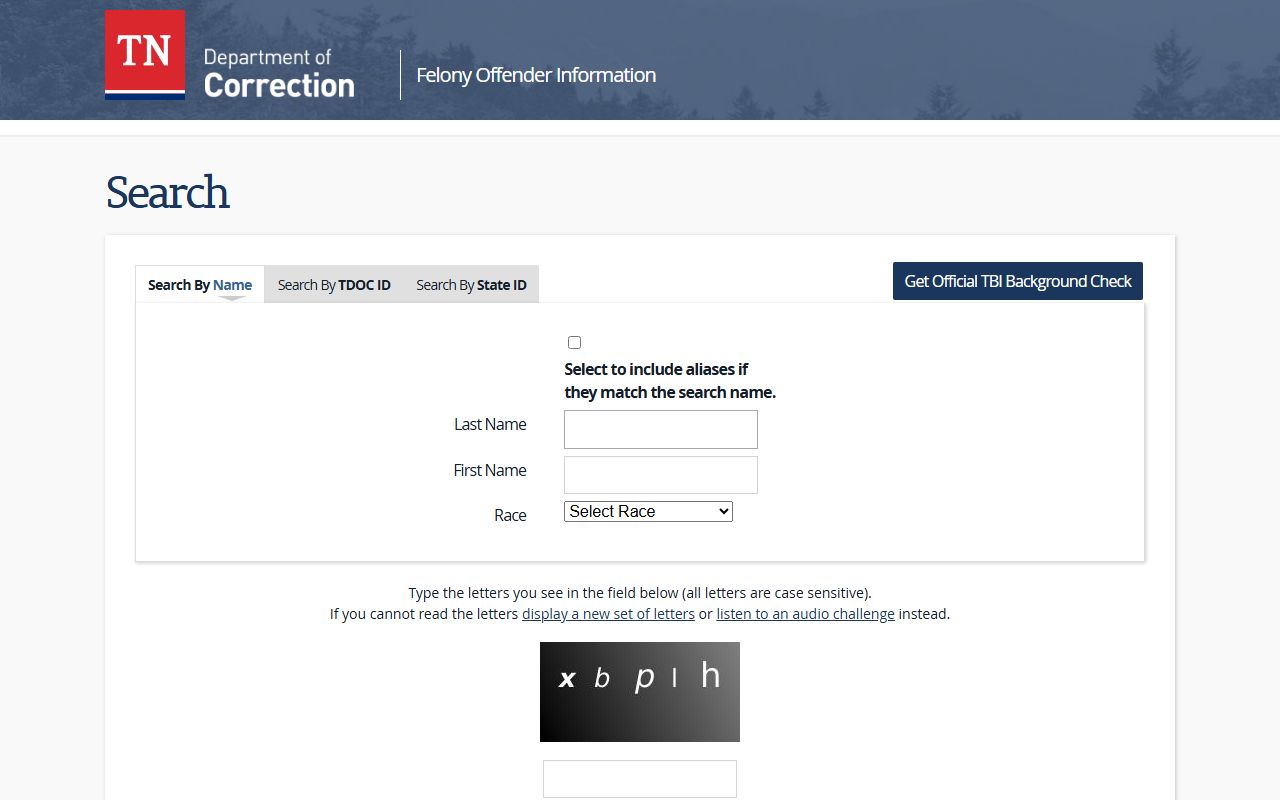
It shows one of the statewide follow-on databases that can help after a warrant matter becomes part of a conviction or correction history.
This image points to the Tennessee Department of Correction at tn.gov/correction.html.
That resource helps round out Tennessee Warrant Records searches when users need incarceration or supervision context connected to an older warrant-based case.
Limits On Tennessee Warrant Records
Some Tennessee Warrant Records are public. Some are delayed. Some are partly closed. Active investigation records can be withheld. Juvenile matters are treated differently. Sealed files stay sealed unless a court opens them. The research also notes that only Tennessee citizens have the full inspection right under the Public Records Act, though agencies may allow broader access in their discretion. If a user asks the wrong office, the answer may be a referral instead of a record.
That does not mean the search is over. It means the search path needs to shift. A denied sheriff request may still leave open a clerk request for the public case docket. A thin local result may be enough to point you to a court division, booking date, or charge class that helps the next request. Tennessee Warrant Records research is often a chain of smaller confirmations instead of one clean statewide result.
This image links to the main Tennessee Bureau of Investigation page at tn.gov/tbi.
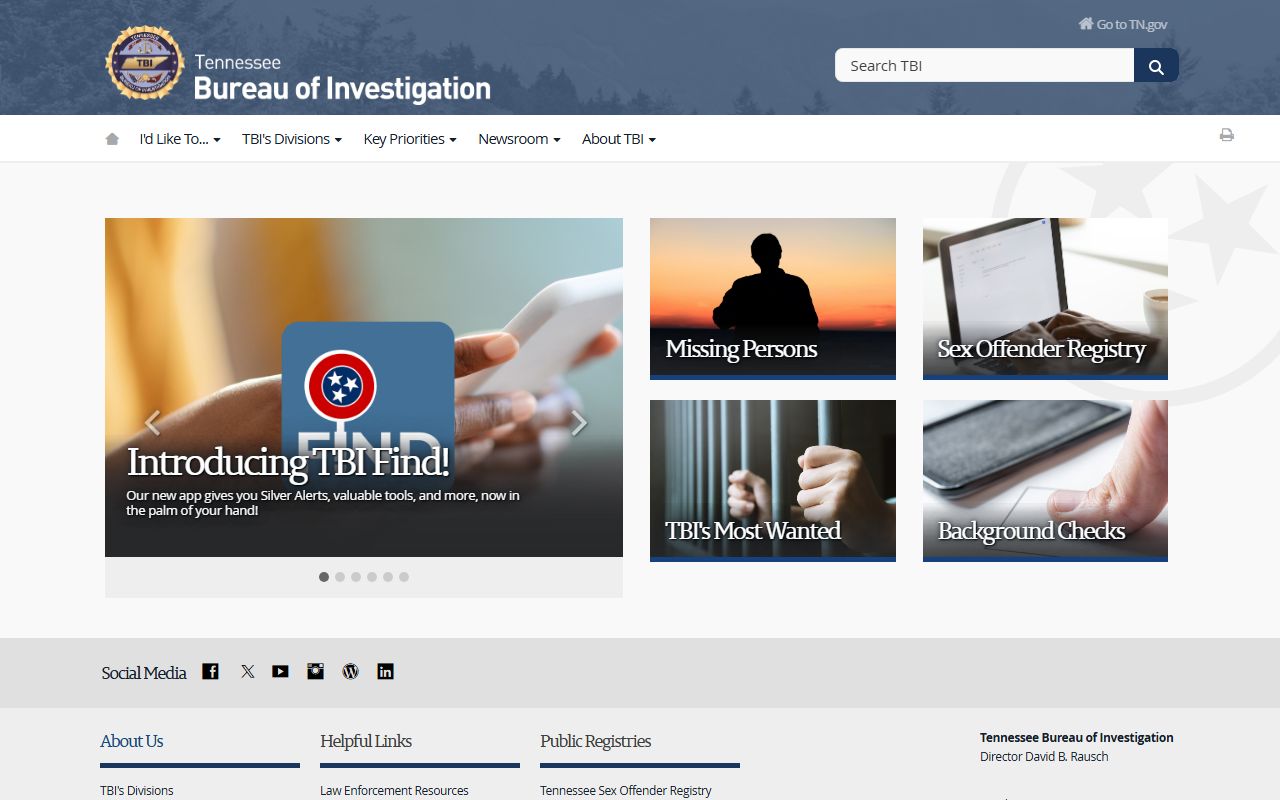
It gives users another official statewide entry point when they need to move from a local warrant question into broader Tennessee criminal justice resources.
Note: A local office may release less than you expect even when a warrant case exists, because access depends on who holds the file and what stage the case is in.
Browse Tennessee Warrant Records by County
County pages focus on the sheriff office, the court clerk, the local warrant process, and any county-specific images or links pulled from the research file. Start with the county where the warrant was issued, served, or filed.
Tennessee Warrant Records In Major Cities
City pages focus on police records, municipal court access, and the county offices that back those records. Use the city page when the search starts with a city police contact, a city court matter, or a city-level address.