
Find Bradley County Warrant Records
Bradley County Warrant Records can help you check an active warrant, confirm a court date, or find the right office for a copy request. In Cleveland, the sheriff, the General Sessions Court, the Criminal Court, and the Circuit Court Clerk each hold different parts of the record trail. Some files are quick to find. Others need a more exact request or a search in the right office. This page brings those local paths together so you can search Bradley County Warrant Records with less guesswork and know where to start first.
Bradley County Quick Facts
Bradley County Warrant Records Search
The Bradley County Sheriff's Office is the first stop for many warrant questions. Its official site is bradleysheriff.com, and the office is at 2290 Blythe Avenue Southeast in Cleveland. The phone number is (423) 728-7300. If you need to know whether a warrant is active, served, or tied to recent custody, that office can point you in the right direction. Start there when the case is fresh or when you only have a name and a rough date.
The sheriff page is also the best place to see the local image tied to this page. It gives you a direct look at the office that handles warrant service and law enforcement follow-up in Bradley County. For some searches, that is enough to tell you whether you need the sheriff, the court, or the clerk. For other searches, it is just the start of a longer trail.
This image links to the official Bradley County Sheriff's Office site at bradleysheriff.com.
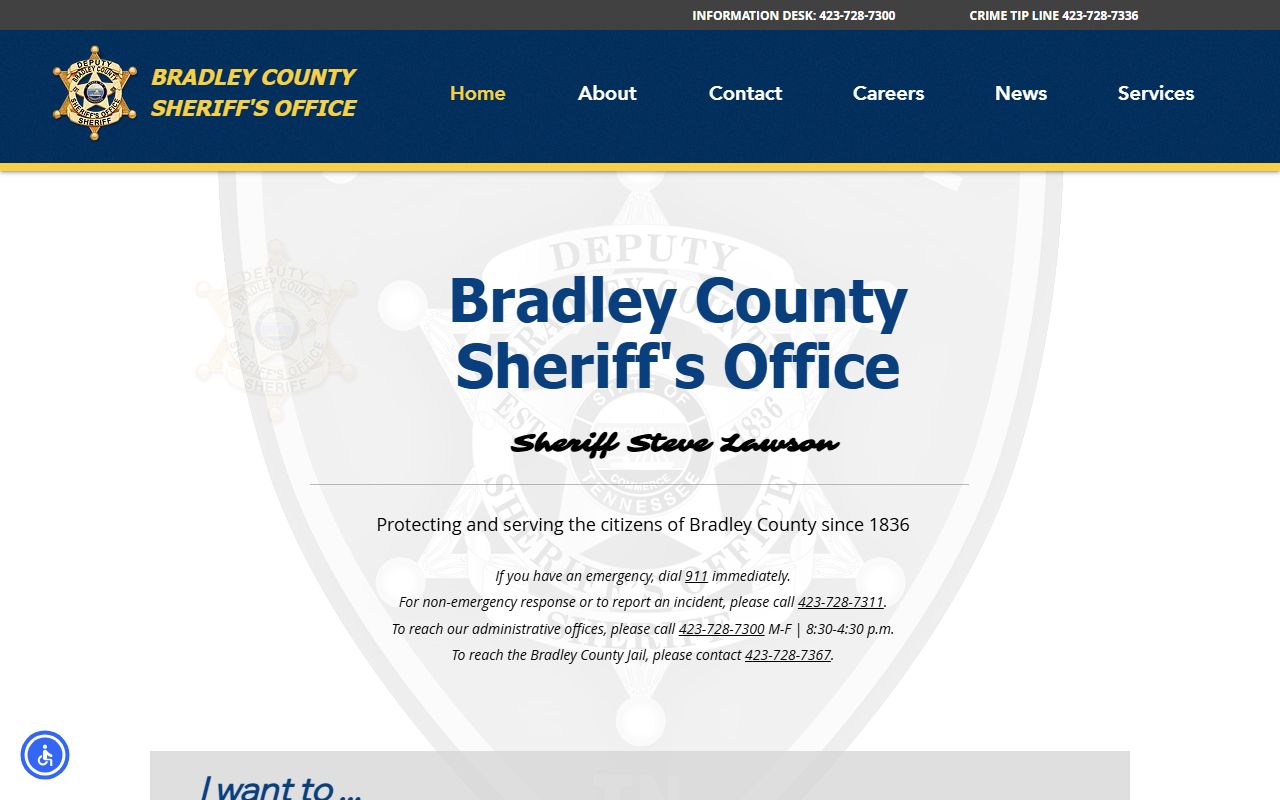
The sheriff office page is the best local door for Bradley County Warrant Records when you need a quick name check or a place to begin a records request.
When you call, have a full name ready. A birth date helps too. A case number or prior address can make the search move faster. Small details matter. They cut down on wrong hits and help the office match the right file to the right person.
Bradley County Warrant Records and the Sheriff
In Bradley County, the sheriff is not the only office that matters, but it is one of the most useful ones. The sheriff can help with active warrant questions, service questions, and recent custody issues. That is important because a warrant may have moved from paper to jail to court in a short time. When that happens, the sheriff's office often knows the first step in the chain.
The Tennessee rules for arrest warrants explain why the sheriff file is only part of the story. Under T.C.A. § 40-6-205, a magistrate must find probable cause before issuing an arrest warrant. That means there was sworn support before the paper was signed. If the matter later leads to a booking, the jail record can show the path from the warrant to custody. The sheriff office and the jail are related, but they are not the same record source.
Bradley County warrant work can also involve process service and court follow-up. If the sheriff served the paper, the return may point to a court date or a later docket entry. If the warrant was not served yet, the sheriff may still be the office with the clearest lead. A fast call can save a trip to the wrong desk.
For broader county context, the Tennessee court system at tncourts.gov helps explain the state court structure. It does not replace the local sheriff, but it gives you a reliable backup when you need to move from a local warrant question to a court file.
Bradley County Warrant Records in Court Files
The Bradley County Criminal Court is at 1620 Johnson Boulevard Southeast in Cleveland. The phone number is 423-728-7081, the fax is 423-476-0538, and the court accepts email filings at Donna.Mingie@tncourts.gov. The Juvenile Criminal Office is at the same address and can be reached at (423) 728-7287. If a warrant case moves into criminal court, that is where the paper trail often settles. Court records can show hearings, motions, and the next steps after the warrant was issued.
The Bradley County General Sessions Court Clerk at the Bradley County Justice Center is another important stop. The phone number is (423) 728-7048. The research says restraining orders and warrants may be obtained there, and that court dates and citation issues are handled there. That makes the office useful when you are not sure whether the matter is a new warrant, a missed court date, or a citation that turned into a bigger case. The clerk may be able to direct you to the right file faster than a countywide search.
The Bradley County Circuit Court Clerk is at 155 Broad St NW in Cleveland, and the phone number is (423) 728-7212. The office keeps felony records and grand jury documents. If a case was indicted or moved into circuit court, the clerk is often the office with the clearest public file. A docket, an indictment, or a certified copy can all help connect the warrant to the later court record.
If you only have a court date or a case style, start with the clerk before you guess. That is usually the fastest way to match the case to the right office. The clerk, the criminal court, and the sheriff often hold different pieces of the same file.
Bradley County Warrant Records and Tennessee Law
Tennessee law shapes how Bradley County Warrant Records are created and how they can be found. Search warrants follow T.C.A. § 40-8-101 et seq. and Tenn. R. Crim. P. 41. Those rules cover how a warrant is issued, executed, returned, and logged. They matter because a warrant file can include more than the signed warrant itself. It may also include a return, an inventory, or other papers that show what happened after service.
Public access is guided by the Tennessee Public Records Act. Under T.C.A. § 10-7-503, government records are generally open during business hours, and agencies must respond within seven business days by producing the record, denying it in writing, or giving a time estimate. That is useful for Bradley County Warrant Records because it sets a clear clock for sheriff offices, court clerks, and other public offices. If you send a request, ask for the specific office and the date range you need.
Not every part of every file is open. T.C.A. § 10-7-504 lists records that can be sealed, limited, or withheld. Active investigation material, juvenile records, and other protected items can be restricted. That means one office may give you a docket entry while another redacts part of the same case. A clean request helps, but the law still controls what the office can release.
Note: A warrant file can be public and still be incomplete, so the court record, sheriff record, and clerk record may each show a different slice of the same case.
Bradley County Warrant Records Copies and Fees
If you need a copy, ask the office what kind of copy you need before you pay. Plain copies, certified copies, dockets, and full files are not the same thing. The clerk may charge per page, and certified copies cost more than plain ones. If you only need to confirm a status or a date, you may not need a full certified record at all.
The Tennessee Office of Open Records Counsel at comptroller.tn.gov/office-functions/open-records-counsel.html is useful when you want to understand public records rules before you file a request. It is not a records clearinghouse, but it explains how the state expects offices to handle access and charges. For Bradley County Warrant Records, that guidance can help you write a narrower request and avoid extra copying costs.
When you make a Bradley County request, keep it short and clear:
- Use the full legal name if you have it
- Add a date of birth or rough age range if possible
- Say whether you want a warrant, docket, or court file
- Note the office, court, or date range if known
For statewide context, the Tennessee Bureau of Investigation offers background checks through the TBI background check page and TORIS. Those tools are not a live Bradley County warrant list, but they can help when you need Tennessee-only criminal history information that sits beside a local warrant search. If the matter has already moved into correction history, the Tennessee Department of Correction and FOIL can add useful post-conviction context.
Related Bradley County Warrant Records
Bradley County Warrant Records often connect to other files. A traffic stop may start with a citation and end at General Sessions. A criminal charge may move into Criminal Court or Circuit Court. A recent booking may show up in the sheriff's record before the court file is ready. That is why the right office depends on the stage of the case, not just the name on the paper.
Historical records can also matter. The Tennessee State Library and Archives at sos.tn.gov/tsla holds older court materials and historical records that can help when a modern office cannot find an old file. If your Bradley County search is for something older, archived court material may be the next place to look. The archives are especially useful when the local record has moved off the active shelf.
For appellate context, the Tennessee Supreme Court Public Case History tool at tncourts.gov/courts/supreme-court/public-case-history can help you trace later case movement. It does not show active trial court warrants, but it can help if a Bradley County matter reached a higher court. That is one more way to connect a warrant to a broader case path.
Bradley County does not have one single online board that shows every warrant stage. The sheriff, the courts, the clerk, and the state tools each hold a different piece. Once you know which stage you are in, the search gets much easier.
Bradley County Warrant Records and Public Access
Most Bradley County Warrant Records are public, but public does not always mean complete. The Tennessee Public Records Act lets Tennessee citizens inspect records, but it also allows offices to protect sealed items, juvenile material, and active investigative files. That is why one office may give you a docket while another gives you a redacted copy or a referral to a different office. The answer depends on who holds the file and what the law allows that office to release.
The Bradley County Criminal Court and General Sessions Court can also have different public access rules from the sheriff's office. One office may be able to tell you that a case exists while another office has the documents you need. If you are not sure where to begin, start with the office closest to the stage of the case. Recent custody points to the sheriff. A hearing date points to the clerk or court. An indictment points to circuit court.
Keep in mind that records do not always stay in one place. A warrant may lead to an arrest, a court filing, a docket entry, and later correction records. The local office is the best first stop, but the trail can move. That is why a Bradley County search often takes two or three offices, not just one.
More Bradley County Warrant Records Help
If you need to keep going, use the state tools and the local office together. The sheriff can help with active matters. The clerk can help with filed cases. The state court site can help with structure and appellate history. Together, those sources give you a better picture than any one page on its own.
When the local search is still unclear, the best backup sources are tncourts.gov, TBI background checks, TORIS, Open Records Counsel, and the State Library and Archives. Each one serves a different role. None of them replace the Bradley County file, but each one can help you confirm a date, a court, or a later record path.
For post-conviction context, FOIL and the Tennessee Department of Correction can help once the case has moved past the warrant stage. If the matter is still open, though, the sheriff and court offices remain the key sources. That is usually the fastest way to keep a Bradley County Warrant Records search on track.
Browse More Tennessee Locations
If Bradley County is not the right county, use the statewide browse pages to keep moving. Warrant records are local first, but cases can cross county lines and court levels fast.