
Find Cannon County Warrant Records
Cannon County warrant records can help you check an active warrant, confirm a court date, or find the office that holds the next copyable file. In Woodbury, the county clerk, the circuit court clerk, the sheriff, and the General Sessions Court each hold a different part of the trail. The best search starts with the newest fact you know and moves toward the office most likely to have created or served the paper. That keeps the request tight and helps you get to the right Cannon County warrant records faster.
Cannon County Quick Facts
Cannon County Warrant Records Search
Start with the Cannon County Clerk if you need the clearest local record path. The office is at 110 W Main St in Woodbury, Tennessee 37190, and the phone number is 615-563-4278. The county clerk maintains certain court records and public documents and handles public records requests. That makes it a useful first stop when you are trying to find the office that can point you to the right warrant file or court record.
The sheriff side matters when the question is current. The Cannon County Sheriff's Office is at 110 W Main St in Woodbury too, and the phone number is (615) 563-4323. The office maintains active warrant records and arrest records. If the case is fresh, the sheriff can often tell you whether the matter is active, served, or tied to recent custody. If the case is older, the clerk or court may have the better file.
Bring the cleanest facts you have. A full legal name helps. A date of birth helps more. A case number or court clue makes the search faster. That small set of facts keeps a Cannon County warrant records request from drifting into the wrong file.
- Full legal name
- Date of birth if known
- Case number or hearing date
- Approximate date of the warrant or arrest
The county search works best when you know which office is likely to have the paper. That is usually the fastest way to get from a live warrant question to the record that explains it.
This image links to the official Cannon County clerk page at cannoncountytn.gov/county-clerk-2.
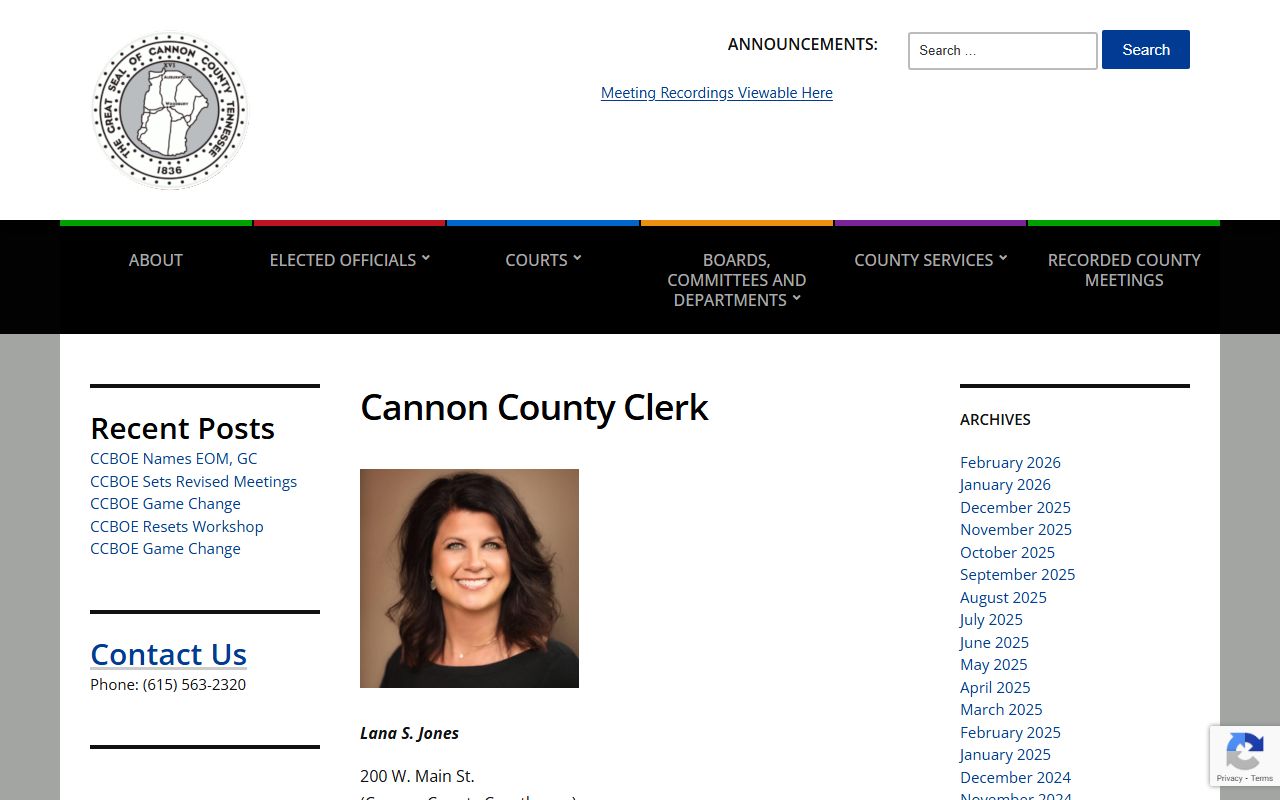
Use it when you need the county office that sits closest to the filed warrant trail in Cannon County.
Cannon County Warrant Records and the Clerk
The county clerk is the first local office that can help with public documents and certain court records. In Cannon County, that office is at 110 W Main St in Woodbury and the phone number is 615-563-4278. If a warrant search points to a filed paper, a public record request, or a local document that is not part of the sheriff side, the county clerk is worth checking first. The office is built to help with records that do not stay on the enforcement side forever.
The circuit court clerk is also in the same building and matters for court filings. That office at 110 W Main St keeps criminal and civil court records and processes court-related documents. The phone number is 615-563-4461. If a warrant became a docket, a charge, or a hearing entry, this is the office that usually holds the stronger case paper.
Because the offices are close together, Cannon County warrant records can move quickly from one desk to another. That makes a clean request even more important. Ask for the office you think holds the file, then widen the search only if the first stop does not answer the question.
For the local court structure, the official county site at cannoncountytn.gov and the county court pages at cannoncountytn.gov/court-clerk and cannoncountytn.gov/magistrate give you the safest county-level context.
Cannon County Warrant Records and Court Files
The Cannon County General Sessions Court is at 110 W Main St in Woodbury, Tennessee 37190. The phone number is (615) 563-4260. The court handles misdemeanor criminal cases and traffic violations. That makes it the right place to check when a bench warrant may have started with a missed appearance or a traffic matter that turned into a court date problem.
The circuit court clerk is the next important stop for filed records. When a warrant turns into a docket, an indictment, or a later hearing entry, the clerk is often the office with the clearest public file. The county site and the clerk pages on the official Cannon County website can help you stay on the right path without relying on a third-party search site.
For a broader court-system view, the Tennessee court site at tncourts.gov explains the state court structure. The Public Case History tool is useful after a case reaches the appellate level, but it does not replace a trial court warrant file. It is a follow-up source, not the first stop.
If the file is older or off-site, the clerk can often tell you where it moved. That is useful in a county where the county clerk, the circuit clerk, and the court are all connected but still keep different records.
Cannon County Warrant Records and Public Access
Tennessee records law controls public access to Cannon County warrant records. Under T.C.A. § 10-7-503, government records are generally open during business hours unless another law says otherwise. That gives you the right to ask for a warrant, a docket, or a clerk file. It does not force the office to release every line without review, so the response may take time.
Some material is limited by T.C.A. § 10-7-504. Active investigation records, juvenile material, and other protected items can be withheld or partly redacted. That means one office may give you a docket entry while another keeps the investigative notes back. Cannon County warrant records can still be public even when the file is not complete.
The Tennessee Office of Open Records Counsel at comptroller.tn.gov/office-functions/open-records-counsel.html explains how public records requests work and what to expect from Tennessee offices. It is not a clearinghouse, but it helps when you need to understand response time, copy charges, or the basic shape of a records request.
Note: A public copy may still leave out sealed or protected details, so the file you get may not show every part of the case.
Cannon County Warrant Records and Tennessee Law
Arrest and search warrant rules explain how Cannon County warrant records are created. Under T.C.A. § 40-6-205, probable cause must support an arrest warrant. That is the first legal step. The paper can later move into service, custody, or court depending on what happens next. The trail is not always in one office, which is why a county search can require more than one call.
Search warrants are governed by T.C.A. § 40-8-101 et seq. and Tenn. R. Crim. P. 41. Those rules cover issuance, execution, return, and inventory. In practice, a search warrant file can include the signed warrant, the return, and later notes that show what happened after service. That is why the clerk and the court matter as much as the sheriff in Cannon County warrant records work.
For older or archived material, the Tennessee State Library and Archives at sos.tn.gov/tsla can help when the local office no longer has the record online. If a Cannon County case has moved into a historical file, the archive may be the next place to check. That is especially useful when the clerk points you toward an older docket or a paper file stored off-site.
Cannon County Warrant Records Copies and Next Steps
If you need a copy, ask the office what kind of copy you need before you pay. Plain copies, certified copies, and docket printouts are not the same thing. The clerk may charge per page, and certified copies usually cost more than plain ones. If you only need status or a hearing date, you may not need a certified record at all.
Use the state tools when the county trail needs more context. The FOIL database can help with post-conviction history, while the Tennessee Department of Correction can add custody or supervision context after a case has moved beyond the warrant stage. Those tools do not replace the local file, but they can keep the search moving.
The best next step is usually the office closest to the stage of the case. County clerk for documents. Circuit clerk for filed cases. Sheriff for active matters. Court for hearing questions. That sequence keeps Cannon County warrant records practical and focused.
More Cannon County Warrant Records Help
If you need to keep going, use the state tools and the local offices together. The sheriff handles current status. The clerk handles filed records. The court handles hearings and case steps. The state court site and archive help when the trail gets older or moves past the county desk. Together, those sources give you a clearer picture than any one page on its own.
Keep these official links close: tncourts.gov, Public Case History, TBI background checks, TORIS, FOIL, Open Records Counsel, and the State Library and Archives. Each one serves a different role.
That order usually gets you to the right Cannon County warrant record faster than a broad search does.