
Search Fayette County Warrant Records
Fayette County warrant records help you check a live warrant, find a hearing date, or track down the office that has the current paper file. In Somerville, the sheriff, the Circuit Court Clerk, and the General Sessions Court each hold a different part of that trail. The best search starts with the newest fact you know and moves toward the office most likely to have created or served the paper. That keeps the request tight and helps you reach the right Fayette County warrant records faster.
Fayette County Quick Facts
Fayette County Warrant Records Search
Start with the Fayette County Sheriff's Office when the matter looks fresh. The official sheriff site at fcsotn.org lists the office at 705 Justice Drive, Somerville, TN 38068, with phone number (901) 465-3456 and administrative hours from 8:00 a.m. to 4:00 p.m. The site also lists Records, Civil Process, Court Security, County Jail, Dispatch, Investigations, Patrol, and School Officers. That makes the sheriff the clearest first stop when you need to know whether a warrant is active, served, or tied to a recent booking.
The sheriff is not the whole record. It is the status side. Fayette County warrant records work best when you match the office to the stage of the case instead of asking one office to explain every step. The local sheriff site gives you the current public contact path, and the county court page at tncourts.gov/node/9782331 gives you the state court address at 16755 US-64, Somerville, TN 38068. That keeps the search anchored in official sources.
Bring the cleanest facts you have. A full legal name helps. A date of birth helps more. A citation number, hearing date, or rough date range is even better. Those small details reduce false hits and give the office a better chance of finding the right Fayette County warrant records on the first try.
- Full legal name
- Date of birth if known
- Case or citation number
- Approximate date of the warrant or arrest
The sheriff is for active status. The clerk is for filed papers. The court is for hearing questions. That order keeps the search practical and avoids wasted calls.
This Tennessee court image points to a statewide backup source at tncourts.gov.
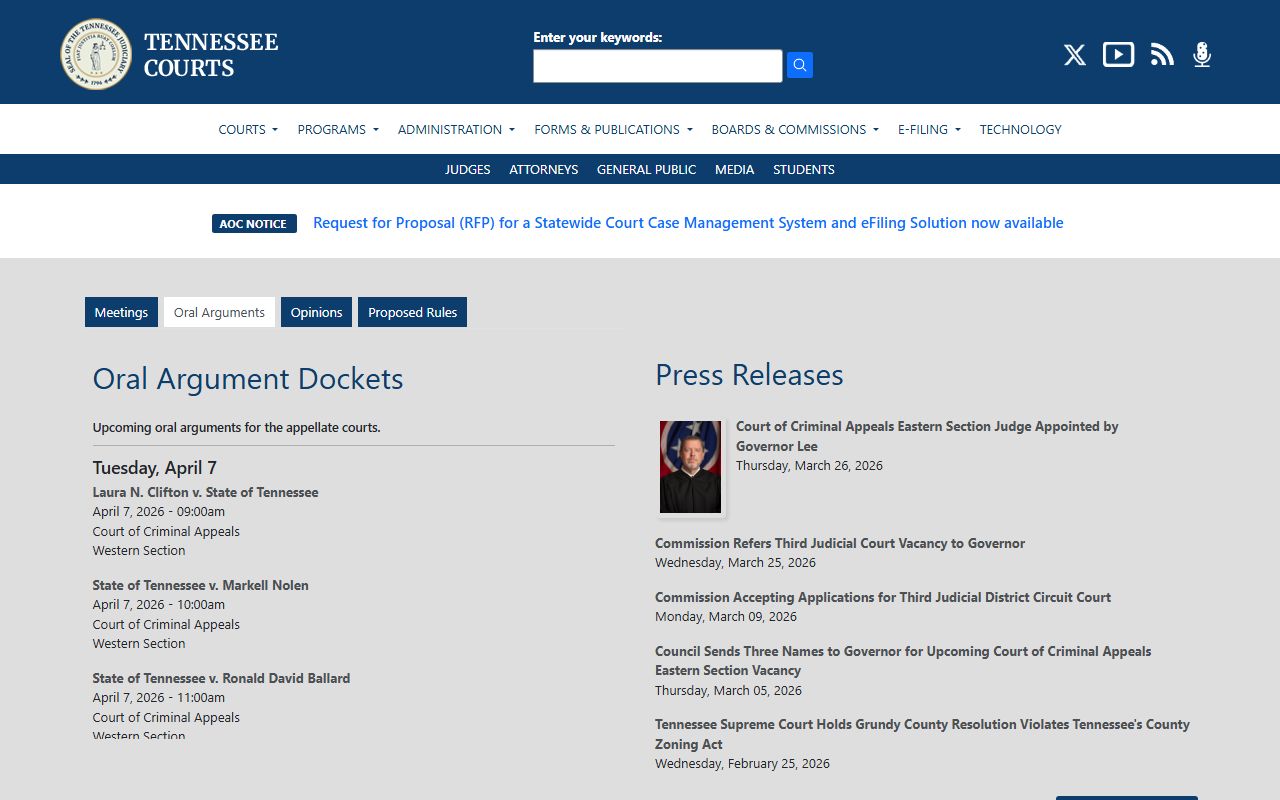
Use it when the county trail needs a reliable state reference before you widen the search.
Fayette County Warrant Records and the Sheriff
The Fayette County sheriff is the fastest local contact for active Fayette County warrant records. The official site says the office is located in Somerville on the new State Route 460 bypass, and it notes that access to the Criminal Justice Center runs through Highway 64 east of Teague Store Road. That matters when you need to know where the public counter is now, because the office moved the way many county justice centers do. A quick call can help you confirm status before you make the trip.
The site also lists Records as a service, which means the sheriff office is a real entry point for warrant questions, jail status, and related law enforcement records. When a case is fresh, that office can tell you whether the paper is still open, whether service has happened, or whether the warrant moved into custody. Fayette County warrant records are easier to sort when you begin with current status and then move to the court file.
The sheriff side does not replace the court record. If the case has already been filed, the clerk may have the cleaner copy. Still, the sheriff is the best place to start when the question is urgent and local. That keeps you from guessing about which office has the latest note.
For a statewide backup, use the Tennessee Bureau of Investigation background check page at tn.gov/tbi/divisions/cjis-division/background-checks.html and the TORIS portal. Those tools do not act as live county warrant lists, but they can add Tennessee criminal history context when the local office only has part of the picture.
Fayette County Warrant Records in Court Files
The Circuit Court Clerk and the General Sessions Court are the court-side homes for Fayette County warrant records. Research lists the clerk at 16755 Hwy 64, Somerville, TN 38068, phone 901-465-5236, and the General Sessions Court at the same address with phone 901-465-5235. The state courts page identifies Fayette County as a Circuit, Criminal & Chancery Courts county, which gives you a strong official anchor for court questions.
The court file is the best source when you need to know whether the case was filed, set, continued, or resolved. It can also tell you whether the warrant was tied to a misdemeanor matter, a failure to appear, or another docket event. That is why the clerk is as important as the sheriff in Fayette County warrant records work. The local court trail is where the paper usually becomes easier to verify.
General sessions matters often move fast. A missed appearance can trigger a bench warrant, and traffic or misdemeanor cases can shift from a simple citation to a warrant question after a short delay. Fayette County warrant records often move from a sheriff contact to a clerk contact to a court question without leaving Somerville. The more you know about the case stage, the easier it is to reach the right office.
For broader court context, use tncourts.gov and the Public Case History page. Those state tools are not a substitute for the local file, but they help you understand where a county case sits in the Tennessee court system.
Fayette County Warrant Records and Public Access
Tennessee public records law shapes access to Fayette County warrant records. Under T.C.A. § 10-7-503, government records are generally open during business hours unless another law says otherwise. That gives you a right to ask for a warrant, a docket, or a clerk file. It does not force the office to hand over every page without review, so the response can still take time.
Some records are limited by T.C.A. § 10-7-504. Active investigation material, juvenile records, and other protected files can be withheld or partly redacted. That means one office may give you the docket while another keeps the investigative notes back. Fayette County warrant records can still be public even when the complete file is not open in one step.
The Tennessee Office of Open Records Counsel at comptroller.tn.gov/office-functions/open-records-counsel.html explains how to make a request and what to expect from a county office. If you need a local trail, the sheriff's site at fcsotn.org and the Tennessee courts page at tncourts.gov/node/9782331 keep you on official sources instead of random search results.
A public copy can still leave out sealed or protected details, so the file you get may not show every part of the case. That is normal. It usually means the office checked the file before release.
Fayette County Warrant Records and Tennessee Law
Arrest and search warrant rules explain how Fayette County warrant records are created. Under T.C.A. § 40-6-205, probable cause must support an arrest warrant. That is the first legal step. Once a warrant is signed, the paper can move into service, custody, or court. The path is not always the same from one case to the next, which is why a county search may require more than one office.
Search warrants are governed by T.C.A. § 40-8-101 et seq. and Tenn. R. Crim. P. 41. Those rules cover issuance, execution, return, and inventory. In practice, that means a search warrant file may include the signed warrant, the return, and later notes that show what happened after service. That is why the clerk and the court can matter just as much as the sheriff in Fayette County warrant records work.
For older or archived material, the Tennessee State Library and Archives at sos.tn.gov/tsla can help when the local office no longer has the file online. If a Fayette County matter is older or has moved away from the live docket, the archive may be the next place to check. That is a cleaner path than relying on a weak third-party page.
The county office and the state archive together give you a clearer trail than a broad web search does. That matters when you want the actual record instead of a summary.
Fayette County Warrant Records Copies and Next Steps
If you need a copy, ask the office what kind of copy you need before you pay. A plain copy, a certified copy, and a docket printout are not the same thing. If you only need status or a hearing date, a certified copy may be more than you need. The clerk can tell you what is actually in the file and whether a plain copy will work for your purpose.
The best next step is usually the office closest to the stage of the case. Sheriff for active matters. Clerk for filed cases. Court for hearing questions. That sequence keeps the search practical and avoids unnecessary back and forth. It also helps you move from a live warrant question to the paper record that explains it.
Use the state tools when the county trail needs more context. The FOIL database can help with post-conviction history, while the TBI background check page and TORIS can add statewide context. Those tools do not replace the local file, but they can keep the search moving when the county office only has part of the picture.
Start with the sheriff, then the clerk, then the court. That order usually gets you to the right Fayette County warrant record faster than a broad search does.
More Fayette County Warrant Records Help
If you need to keep going, use the sheriff's office, the county court, and the state tools together. The sheriff handles current status. The clerk handles filed records. The court handles hearings and docket movement. The state court site and archive help when the trail gets older or moves beyond the county desk. Together, those sources give you a clearer picture than any one page on its own.
Keep these official links close: fcsotn.org, Fayette County courts, tncourts.gov, Public Case History, TBI background checks, TORIS, FOIL, Open Records Counsel, and the State Library and Archives.
That order usually gets you to the right Fayette County warrant record faster than a broad search does.